WAR BULLETIN 001 / OPERATION PANTRY FREEDOM
14 October 2026 · 0442 hours · Kitchen Theatre of Operations
⚠ FIRST CONTACT / ENEMY IDENTIFICATION
PANTRY MOTHS
suspected: Plodia interpunctella
Common name: Indianmeal moth (German: Dörrobstmotte). Identification provisional: only a larva has been observed; several stored-food moth species look similar.
At 0442 hours, a lone enemy larva was spotted in the wild. The pantry is compromised.
For some time, High Command had enjoyed the reassuring belief that its strategic reserves of flour, grains, nuts and miscellaneous provisions were secure. This belief has now been classified as dangerously optimistic.
The enemy has chosen its battlefield carefully: a vast network of cupboards, supply drawers and packages accumulated for contingencies that, until this morning, did not include an organized moth offensive.
Reconnaissance photographs
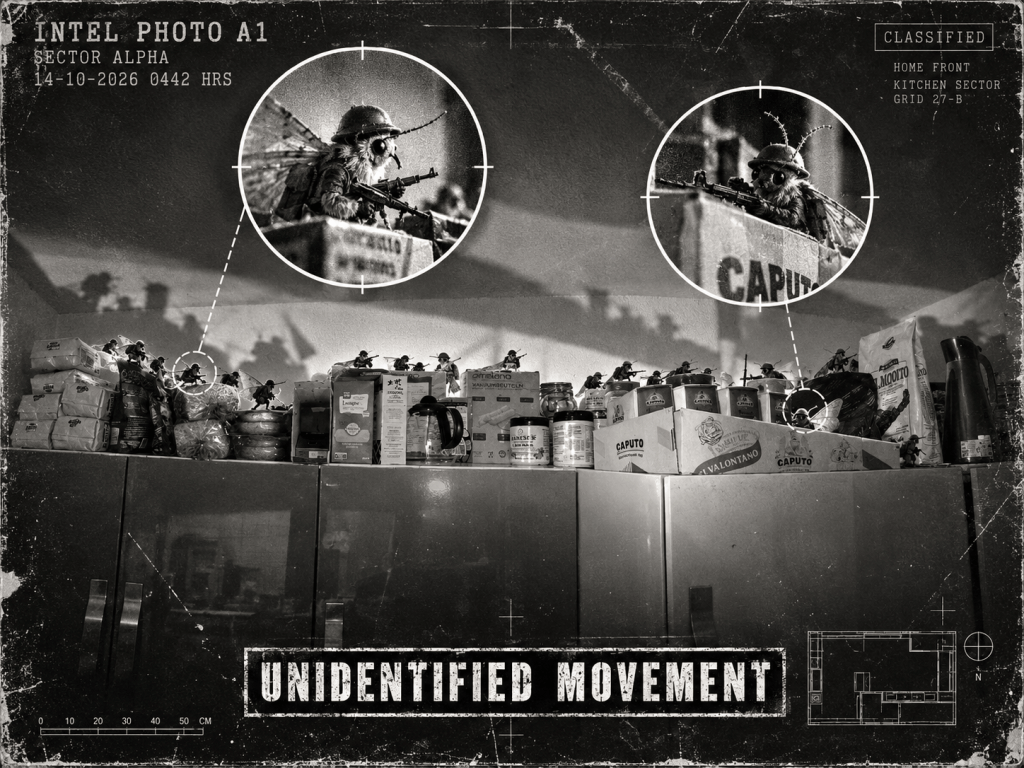
Sector Alpha — Northern Storage Line. The upper cupboard reserves stretch across the horizon. Military intelligence has been instructed to investigate every suspicious speck.
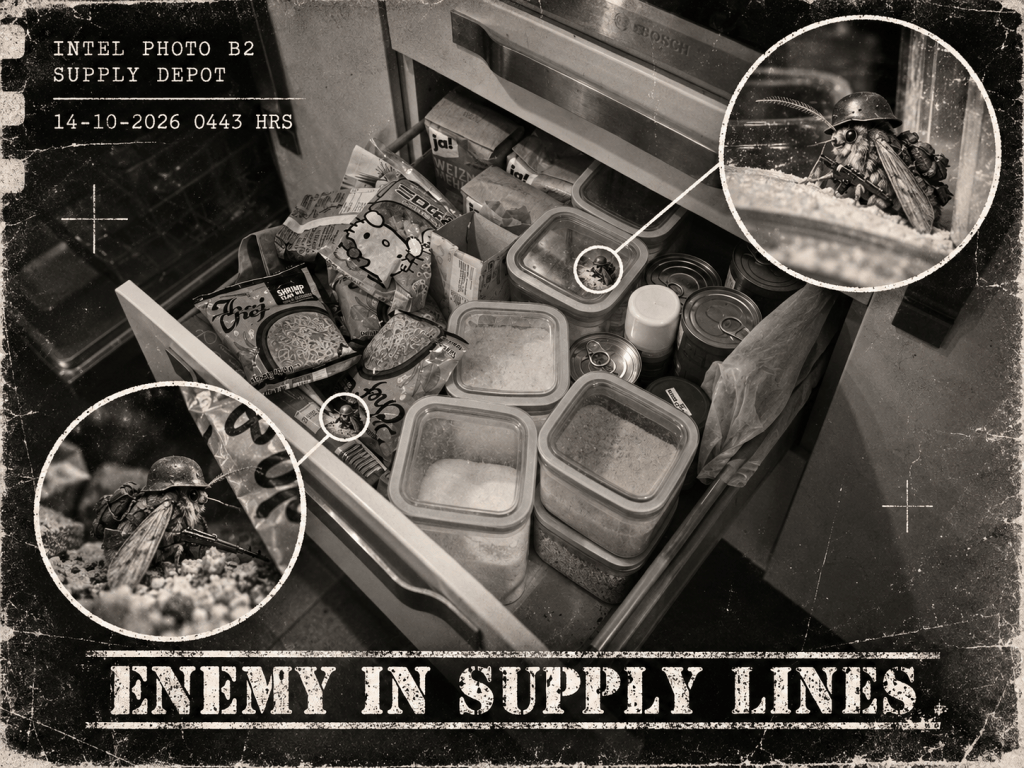
Sector Bravo — Lower Supply Depot. Flour and packaged provisions remain in the contested interior. The enemy’s intentions are not known; their taste in logistics is alarming.
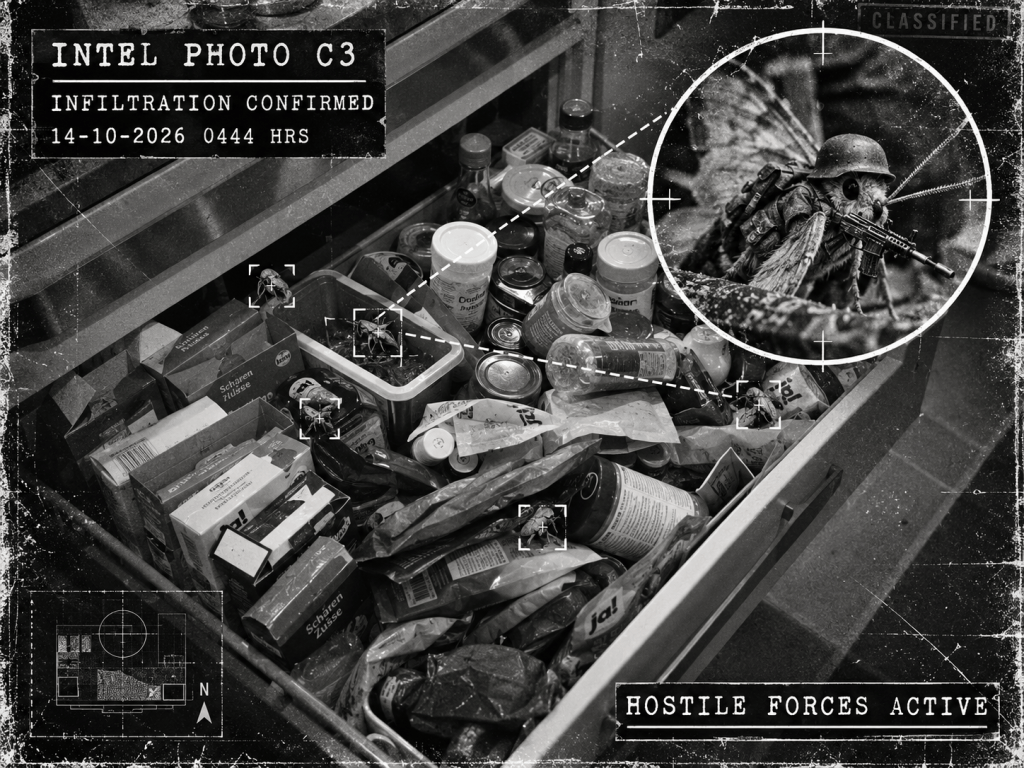
Sector Charlie — The Interior. A crowded maze of containers and provisions provides ample concealment for forces no larger than a fingernail.
Anti-Moth Allied Command has authorized a full assessment of the situation. No casualty figures are available. No territory has yet been declared liberated.
All units are advised to remain vigilant. The enemy is small. The implications are not.
Creative reenactment: moth soldiers and military markings are fictional. The real confirmed observation was one larva at 0442 hours.

